

Purpose
The purpose of this quick reference guide is to step through the process of creating AU Super Payee Withholding records. The intended audience for this document is system administrators / standard users.Steps
Create a New Superannuation Payee Withholding Record
The AU Super Payee Withholding record holds the General Information, Superannuation Fund Details, and Superannuation Controls for a Payee’s superannuation entitlements. Create an AU Super Payee Withholding by following the below steps:- Navigate to the Payee record.
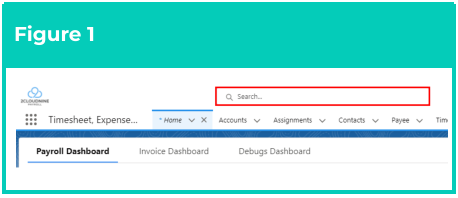
- To identify a Payee record from an Employee record, enter the Employee name into the Global Search (see Figure 1).
- Select the Employee record from the suggestions provided.
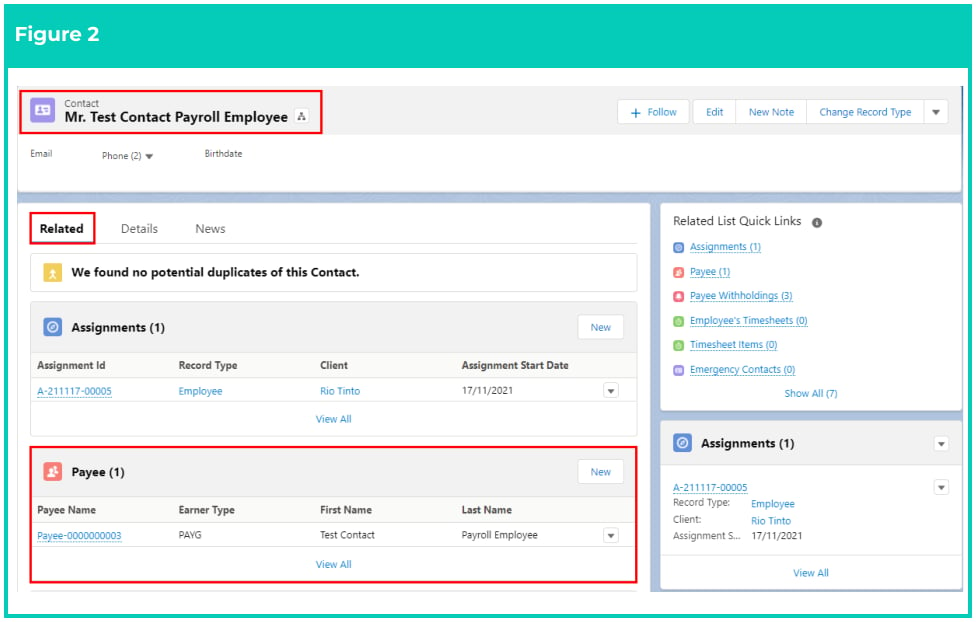
- Open the Related tab (see Figure 2)
- Identify the Payee record(s).
- Select the Payee record
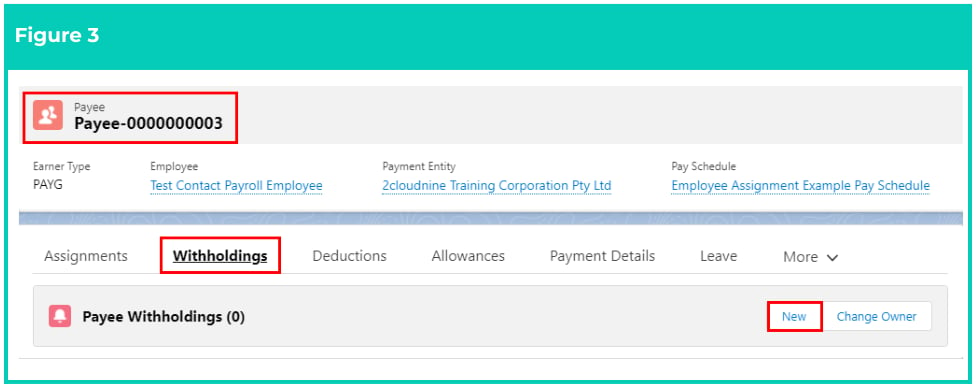
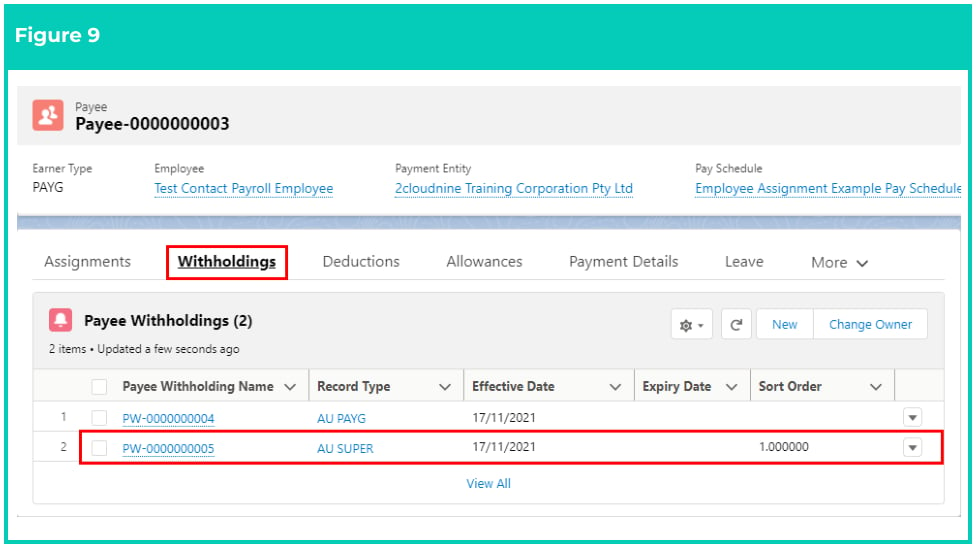
- Click Withholdings from the tab options (see Figure 3).
- Click New .
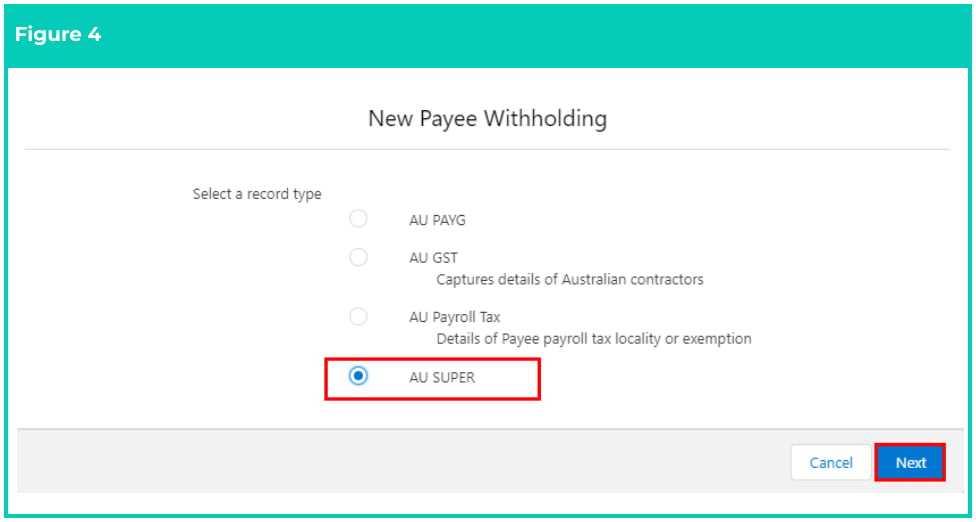
- Select AU SUPER from the available Record Types and click the Next button (see Figure 4).
-
Follow this step in the sequence given below:
-
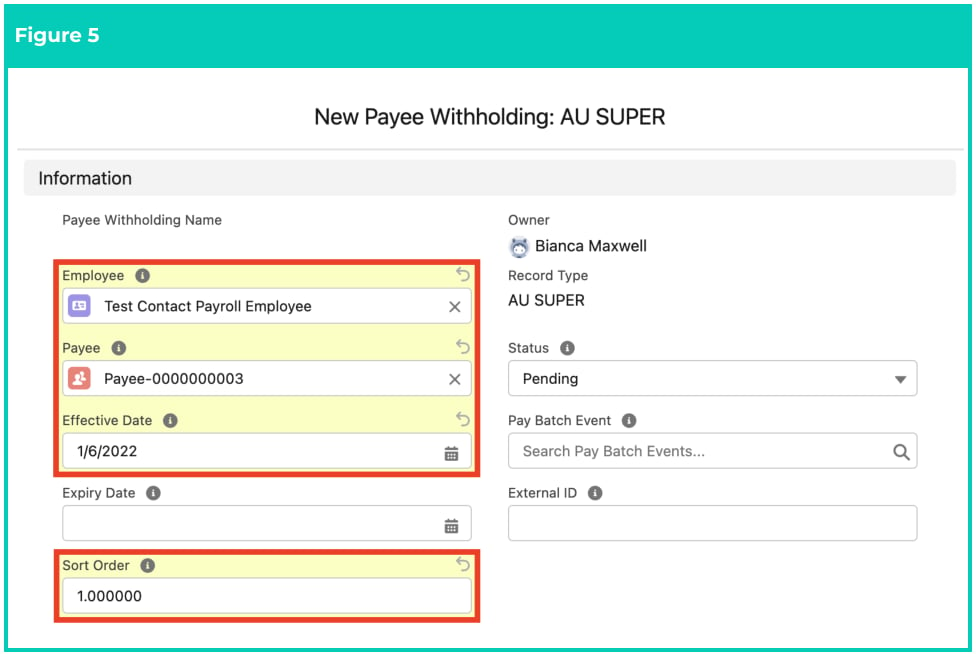
Populate the following required fields to provide the base details of the Payee
Withholding record (see Figure 5):
- Employee
- Payee
- Effective Date
- Sort Order
- Effective Date
-
Populate the following optional fields as required (see Figure 5):
- Expiry Date
-
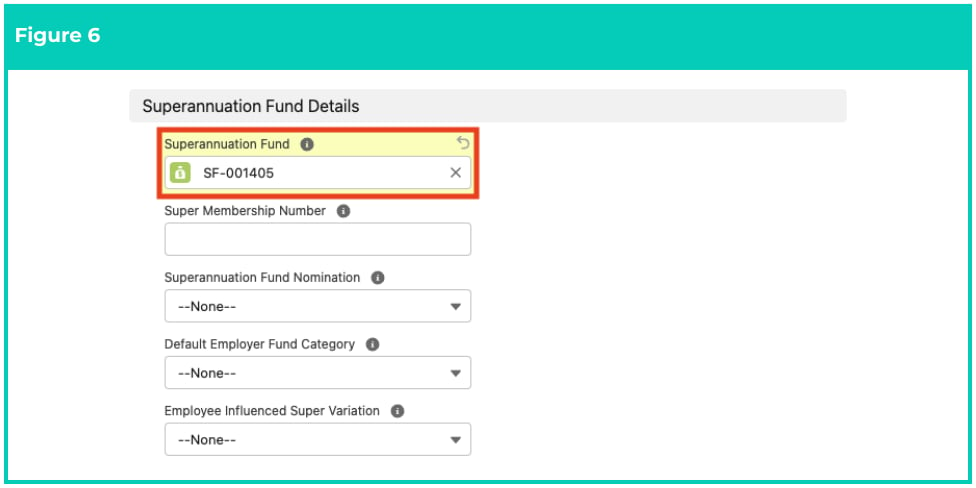
Populate the following required fields to provide the base details of the Payee
Withholding record (see Figure 6):
-
To define the Employee-nominated superannuation account, populate the
Superannuation Fund using the lookup options available.
- If no superannuation account has been provided and cannot be identified for the Employee via ATO Online Services, you may nominate Default Employer Fund within the Superannuation Fund Nomination field as this will automatically populate the Superannuation Fund field with the details of the Default Employer Fund after saving.
-
To define the Employee-nominated superannuation account, populate the
Superannuation Fund using the lookup options available.
-
Populate the following optional fields as required (see Figure 6):
- If known, enter the membership number in the Super Membership Number field.
- For APRA/RSA or Self-Managed Funds, validate the type of Fund nominated in the Superannuation Fund field by selecting from the available picklist options in the Superannuation Fund Nomination field.
-
To set up a Superannuation Variation from the standard SGC amount, select from
the available picklist options in the Employee Influenced Super Variation field.
- If ‘Yes’ is selected, any Employer Superannuation Contributions above the current SGC rate will be calculated separately as Employer Additional and reported as RESC.
- If ‘No’ is selected, the Employer Contributions will be listed on the SuperStream Lodgements as Award Contributions.
- If you require it to be reported as SGC, this field should be blank.
-
Populate the following required fields to provide the base details of the Payee
Withholding record (see Figure 5):
If no Superannuation Fund has been nominated by the Employee, you must follow the
instructions detailed in QRG Checking Stapled Superannuation to search for the
Payees Stapled Superannuation via ATO Online Services.
If no Default Employer Fund has been configured within your Org, you must follow the instructions
detailed in the QRG Create Superannuation Fund - Default Employer Fund to create the necessary
record before it may be nominated as the preferred Fund for Employees.
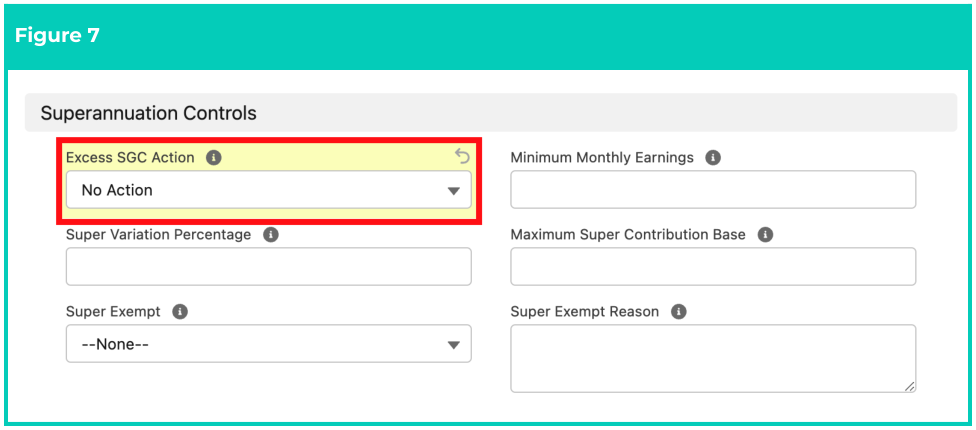
- Populate the following required fields to provide the base details of the Payee
Withholding record (see Figure 7):
- To determine how excess Employer Super Contributions should be processed, select from the available picklist options in the Excess SGC Action field.
- Populate the following optional fields as required (see Figure 7):
- To define a value for the Superannuation Variation, populate either the Super Variation Percentage field or the Super Variation Amount field.
- To define an exemption from Employer SGC calculation for this Payee, select from the available picklist options in the Super Exempt field, and populate the Super Exempt Reason field.
- To override any Minimum Monthly Earnings limitations defined in the related Withholding Rule Item, populate the Minimum Monthly Earnings field.
- To override any Maximum Super Contribution Base limitations defined in the related Withholding Rule Item, populate the Maximum Super Contribution Base field.
-
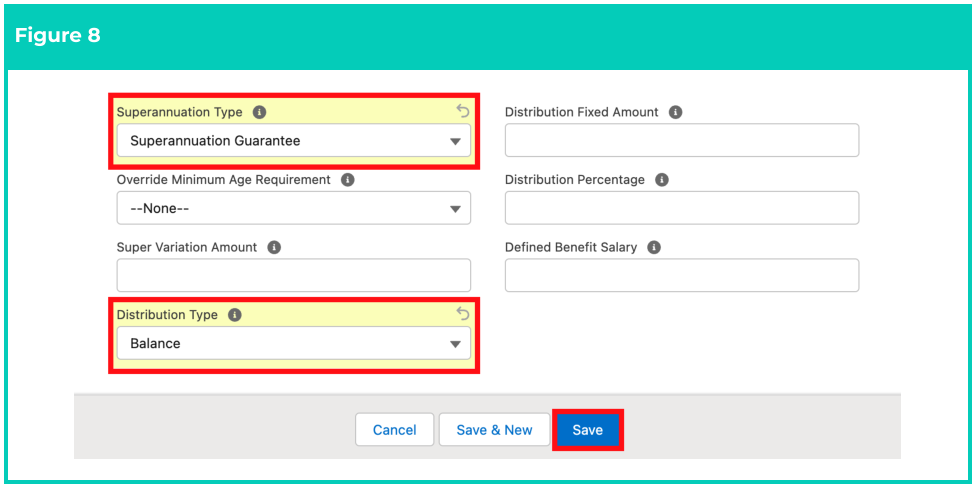
Populate the following required fields to provide the base details of the Payee
Withholding record (see Figure 8):
- To determine how Super should be calculated for this Payee, select from the available picklist options in the Superannuation Type field.
-
To determine how Super funds should be allocated to the Payee, select from the
available picklist values in the Distribution Type field.
- If Balance is selected, all unallocated Super funds will be allocated to the Payee.
- If Distribution Fixed Amount is selected, the related field will need to be populated with an amount.
- If Distribution Percentage is selected, the related field will need to be populated with a percentage.
-
Populate the following optional fields as required (see Figure 8):
- To define a value for the Superannuation Variation, populate either the Super Variation Percentage field or the Super Variation Amount field.
- To override the minimum age and working hour requirements for Super calculations, select from the available picklist options in the Override Minimum Age Requirement field.
- To define the annual salary on which defined benefit contributions will be calculated, populate the Defined Benefit Salary field.
- Click on the Save button (see Figure 8).
Payee Withholding records CANNOT be deleted if they have related records or are used in other
records. Deleting records is not recommended unless absolutely essential.
- To modify an existing Payee Withholding record, open the required record and select the Edit button available on the top right side of the page. You can also double click within fields that need editing or just click on the pencil icon that appears within fields when hovering with your cursor.
- When complete, click on the Save button.
Field Descriptions
Default Employer Fund Category enables employers to have multiple Default Superannuation Funds per Payment Entity, but that might only be for particular areas of the business. This restricts which Default Superannuation Fund will apply to this Payee. Defined Benefit Salary if the Superannuation Type is Defined Benefit, this is the annual salary on which the Defined Benefit Contributions will be calculated. Distribution Fixed Amount if Distribution Type is Fixed Amount, this is the fixed amount to be applied during superannuation distribution where multiple funds are being used for this payee. Distribution Percentage if Distribution Type is Percentage, this is the percentage to be applied during superannuation distribution where multiple funds are being used for this payee.Distribution Type
- For Fixed Amount, funds will be distributed to the value defined in the Fixed Amount field.
- For Percentage, funds will be distributed to the percentage rate defined in the Percentage field.
- For Balance, all unallocated funds will be allocated.
- No Action = Superannuation calculation will stop at the applicable Maximum Contribution Base. No refund will be calculated automatically.
- Refund = Superannuation calculation will stop at the applicable Maximum Contribution Base and any refund will be automatically paid to the Payee in the same Pay Batch using your Pay Code where the ‘Excess SGC Refund’ checkbox is ticked
- Deduction = same as Refund, however, the value will be directed to an existing Payee Deduction Record where the Deduction Rate Type is Percentage of SGC Refund. All or part of the refund can be directed to the Payee Deduction Record based on the deduction rate entered on it.
- APRA or RSA Fund
- Default Employer Fund
- Self Managed Fund