

Purpose
The purpose of this quick reference guide is to step through the process of creating a Daily Rates Interpretation Rule using the Interpretation Rule Builder. The intended audience for this document are system administrators / standard users.Steps
Create a Daily Rate Interpretation Rule
Interpretation Rules are used to convert Timesheet Entries into Pay Transactions for payment of wages to Payees, taking into account various calculations for the amount of time worked. Interpretation Rules are created using the Interpretation Rule Builder, which consists of a series of dynamic fields that differ based on the record type selected. These fields are broken into several sections, some of which are optional, to allow for interpretation of various Award types. See below for an ordered list of the QRGs related to each section of the Interpretation Rule Builder page for Daily Rate record types:- Create Daily Rate Interpretation Rules
- Create Allowance, Leave & Allowance Junction Rule Breakpoints (optional)
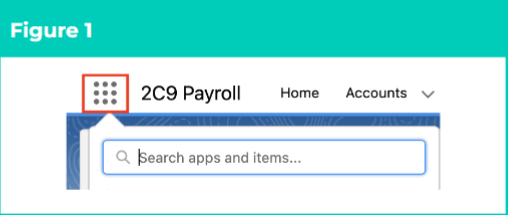
- Click on the App Launcher icon (see Figure 1).
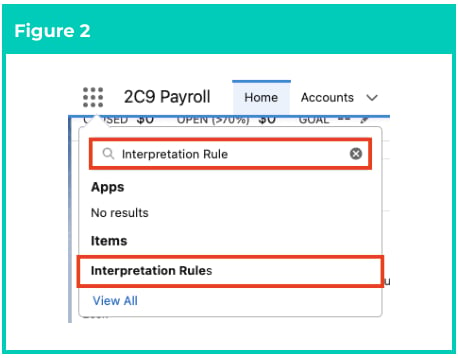
- Go to the Interpretation Rule object by using the Search function (see Figure 2).
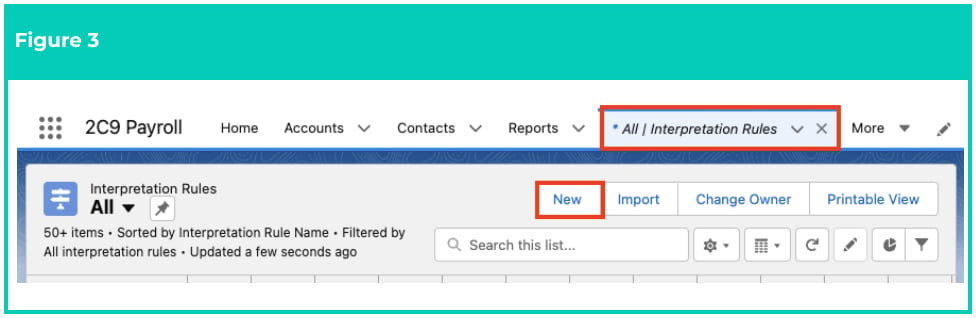
- Click on the New button (see Figure 3).
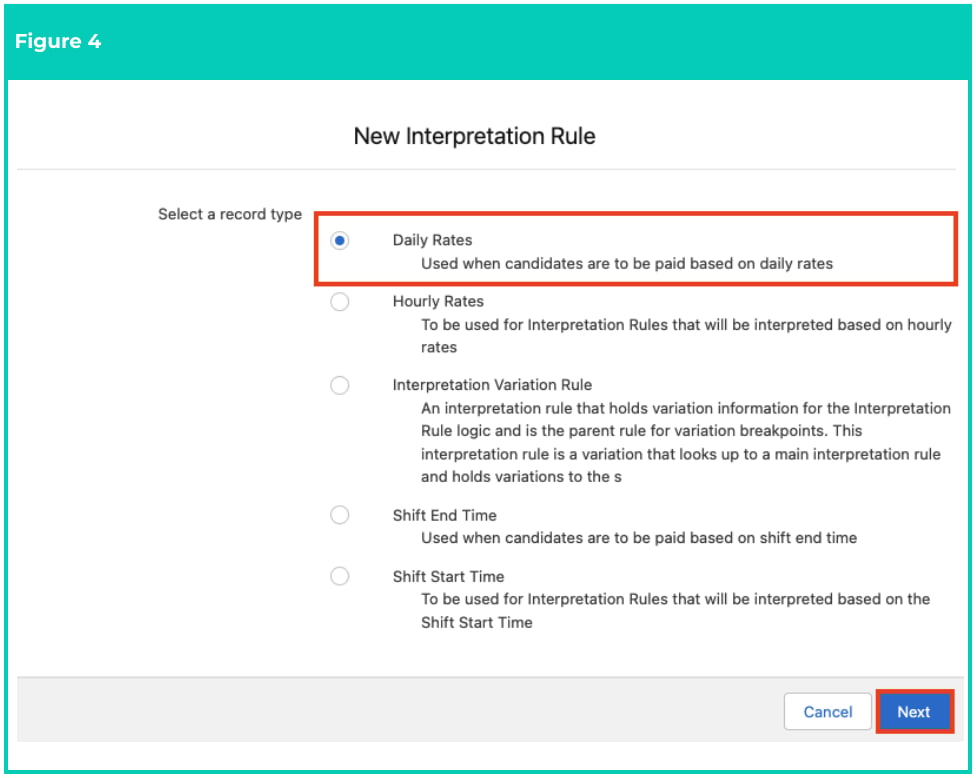
- Select Daily Rates from the available record types and click on the Next button (see Figure 4).
- Follow this step in the sequence given below:
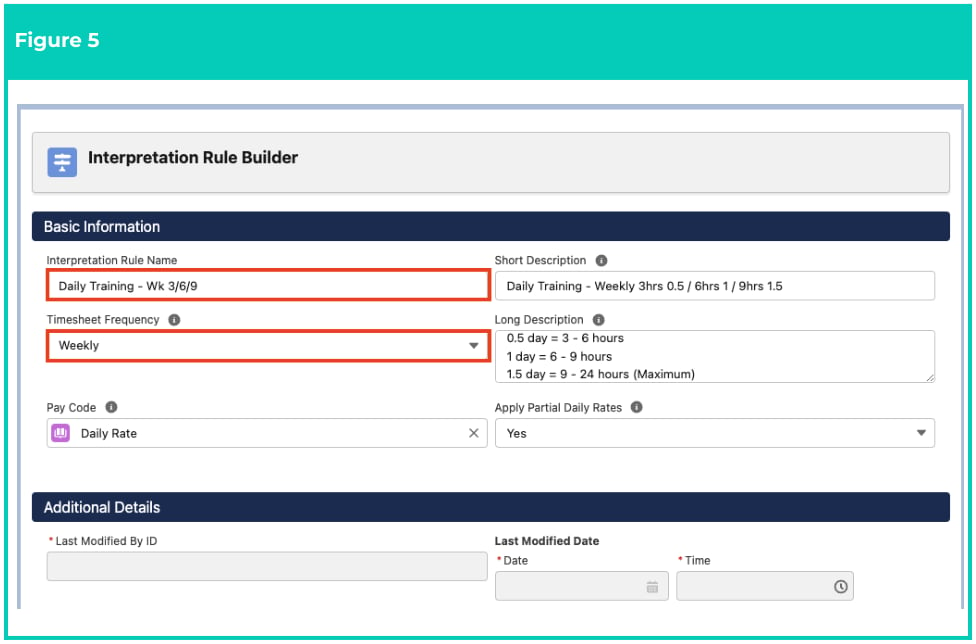
- Populate the following required fields to provide the base details of the Interpretation
Rule (see Figure 5):
- Interpretation Rule Name
- Timesheet Frequency
- Populate the following optional fields as required (see Figure 5):
- To provide a description that can be used to quickly identify the Interpretation Rule, populate the Short Description field.
- To provide a description that can be used to quickly identify the configuration of the Interpretation Rule, populate the Long Description field.
- To define the Pay Code to be used when creating Pay Transactions in relation with this Interpretation Rule, populate the Pay Code field using the lookup options available.
- To determine whether Employees may be paid partial Rates according to the amount of hours worked each day, select from the available picklist options in the Apply Partial Daily Rates field.
- Populate the following required fields to provide the base details of the Interpretation
Rule (see Figure 5):
- If the Apply Partial Daily Rates field was populated Yes in Step 5b., follow this step in the
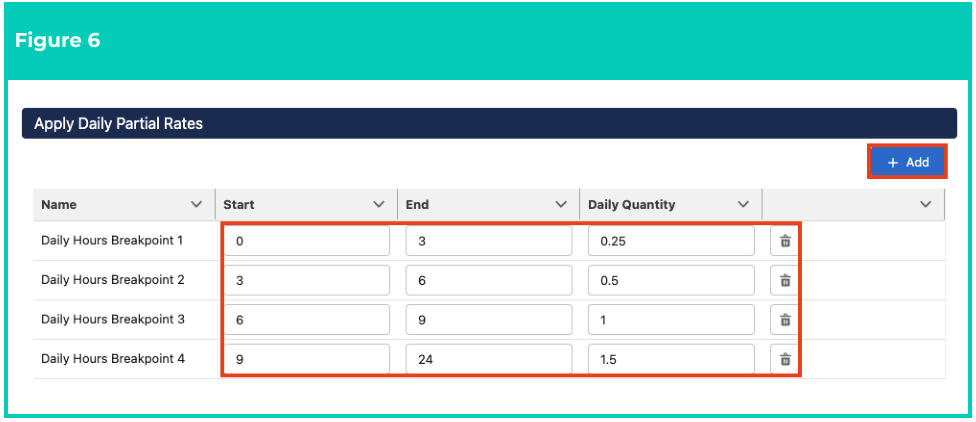
sequence given below (see Figure 6):
- To define Partial Daily Rate Breakpoints, populate the following required fields:
- Click on the + Add button and a new Daily Hours Breakpoint line will be added.
- To define the amount of hours for the first Daily Hours Breakpoint, populate the End field.
- To define the amount of Pay Code units to be applied to related Pay Transactions, populate the Daily Quantity field with a decimal percentage.
- Repeat Step 6a. until a full 24 hours of Partial Rate Breakpoints have been accounted for.
- To define Partial Daily Rate Breakpoints, populate the following required fields:
If Breakpoints are added to a Daily Rates Interpretation Rule, they must account for
the full 24 hours of a shift before the record can be saved.
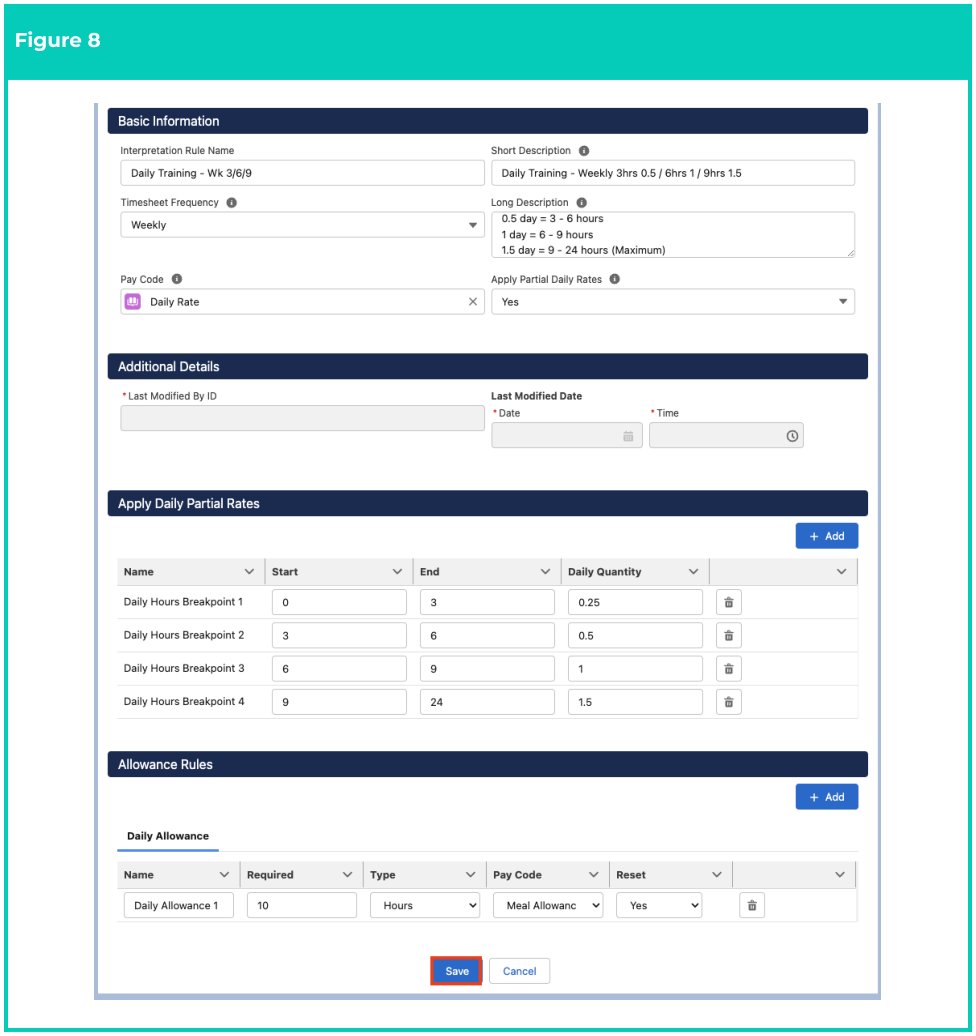
- Click on the Save button (see Figure 8).
- Review and confirm the details of the Interpretation Rule, then click on the Finalise button to activate the record for use in Assignments and Timesheets (see Figure 9).
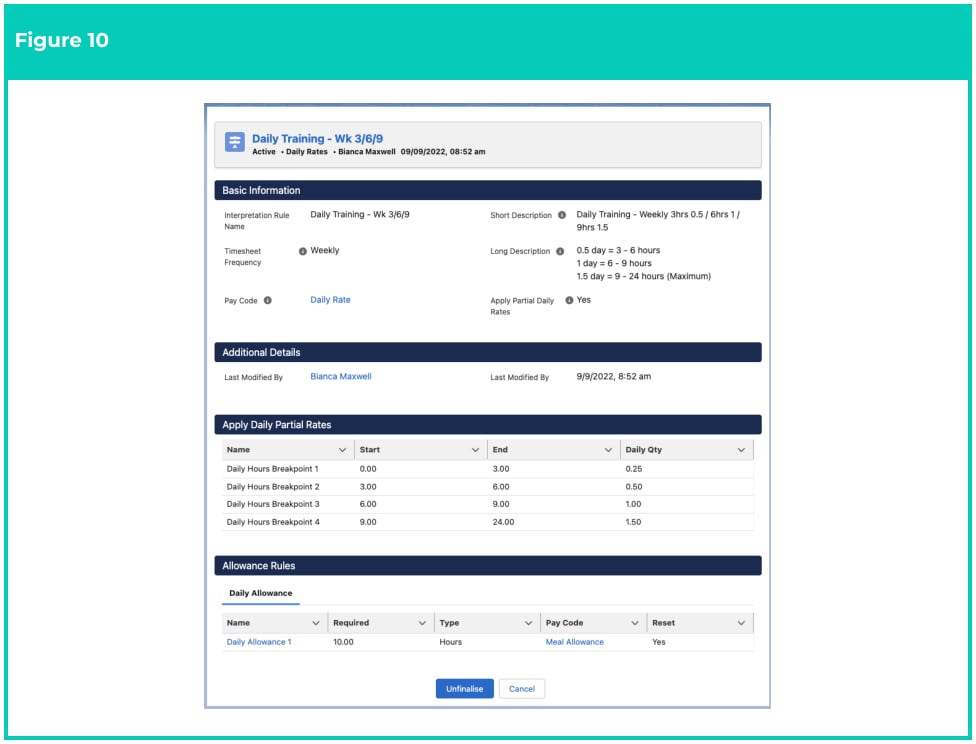
- A new Daily Rate Interpretation Rule has been created (see Figure 10).
If multiple Timesheet Frequencies are applicable for this Interpretation, separate
Interpretation Rules will need to be created for each Timesheet Frequency required.
Once an Interpretation Rule has been Finalised and related to another record, it
CANNOT be deleted from the system. Once no longer required, Interpretation Rules
are unable to be expired/end dated, so it may be preferred to rename this
Interpretation Rule with a name to easily identify it is a retired Interpretation Rule